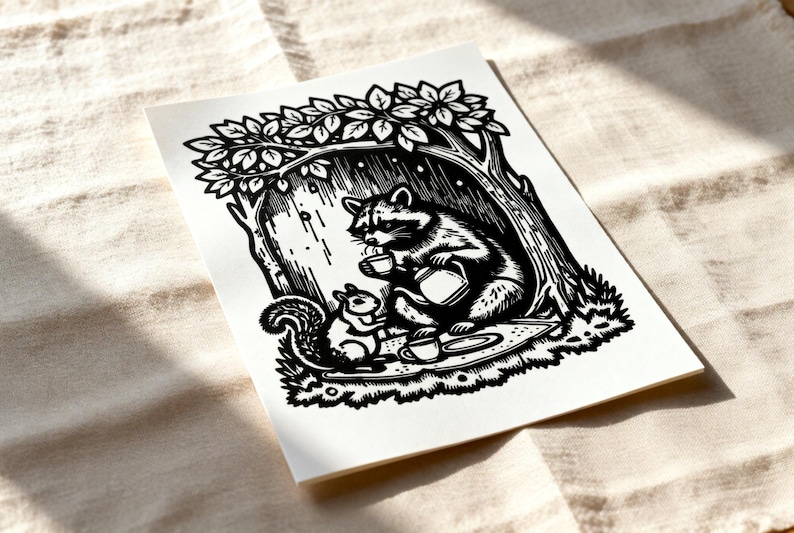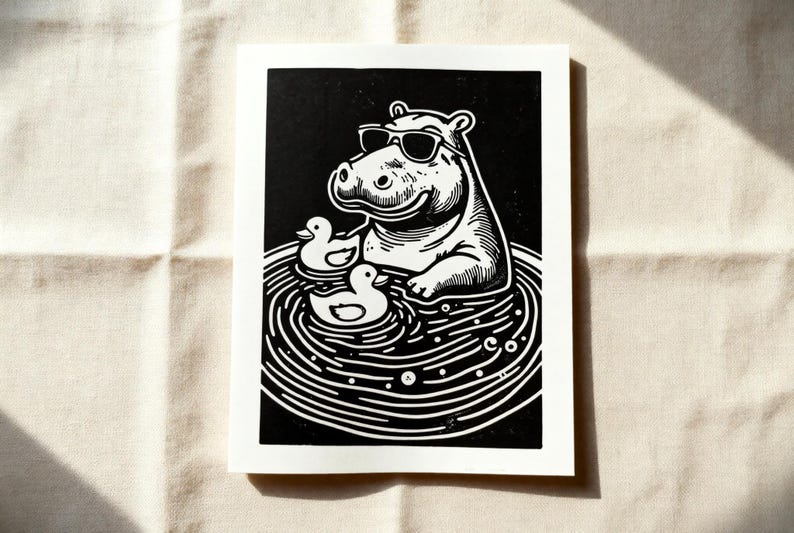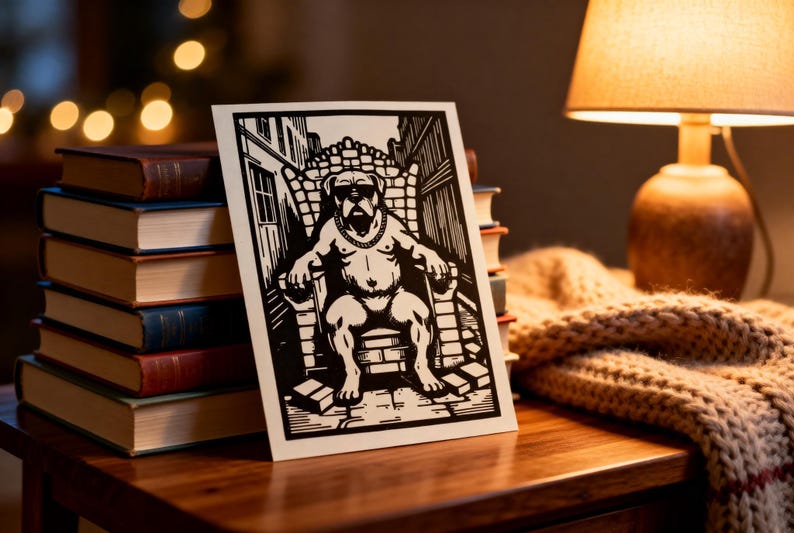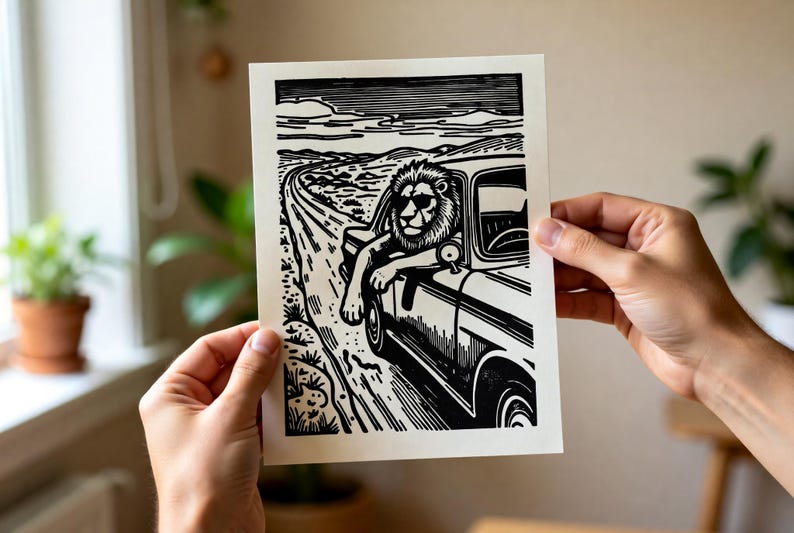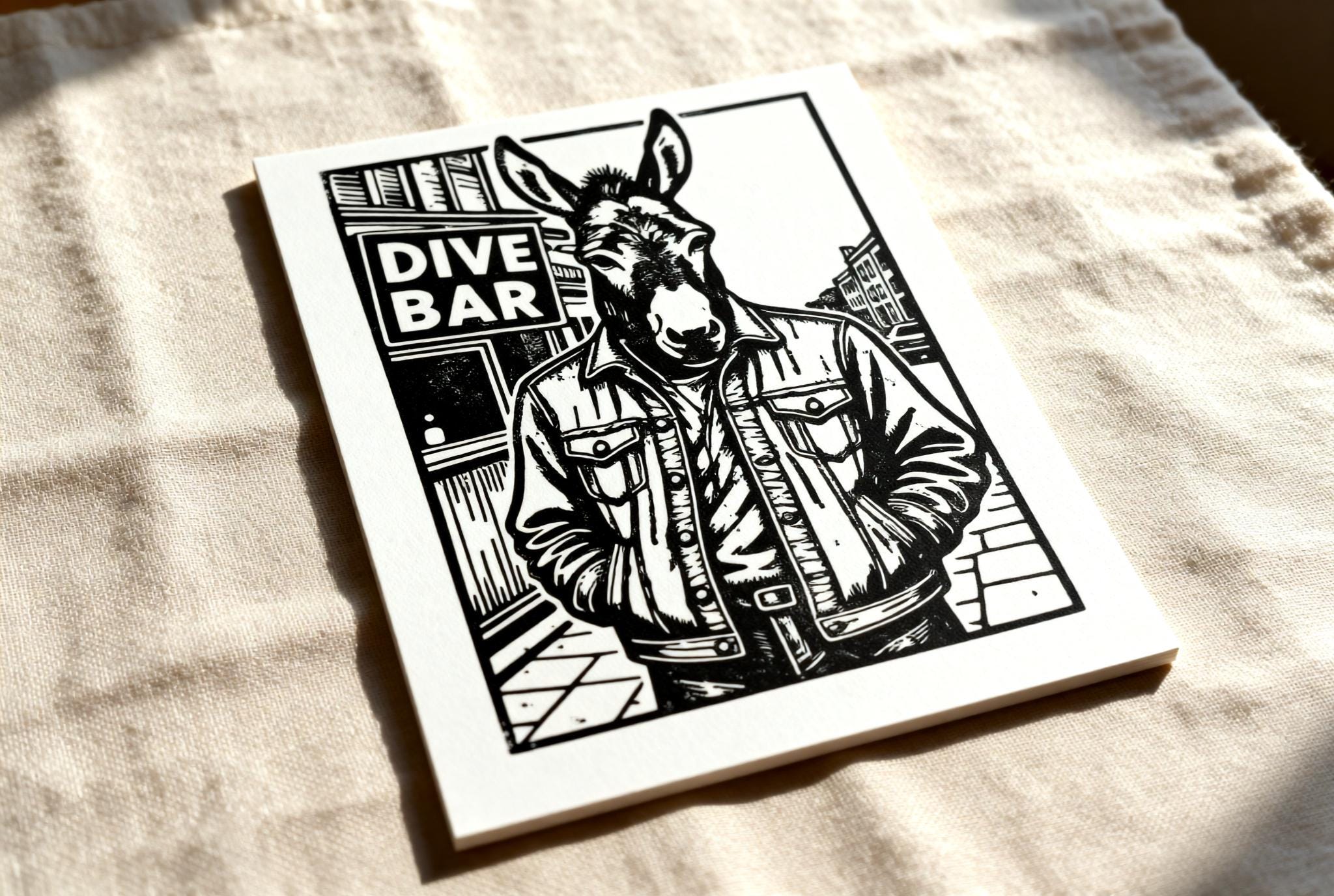
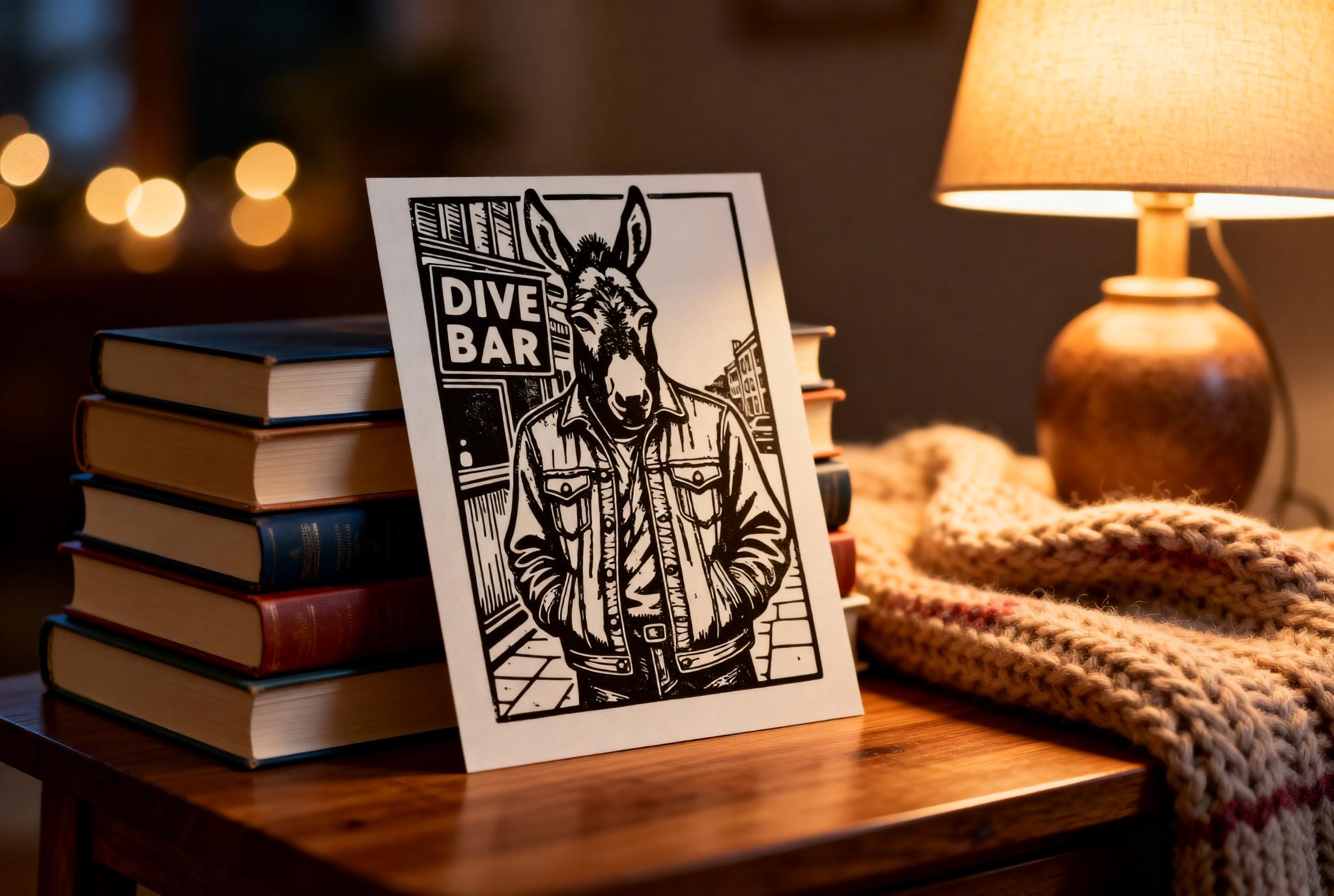
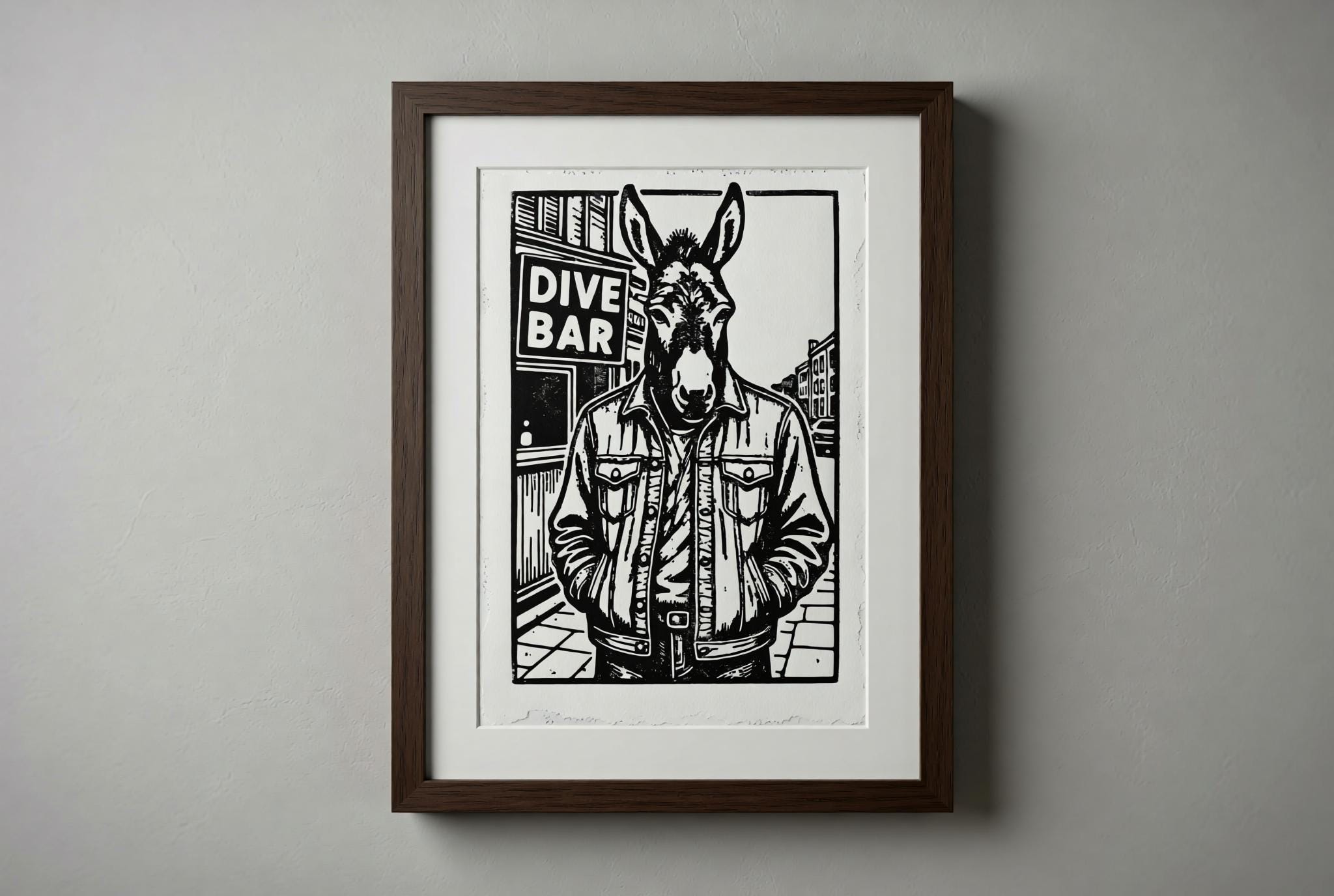
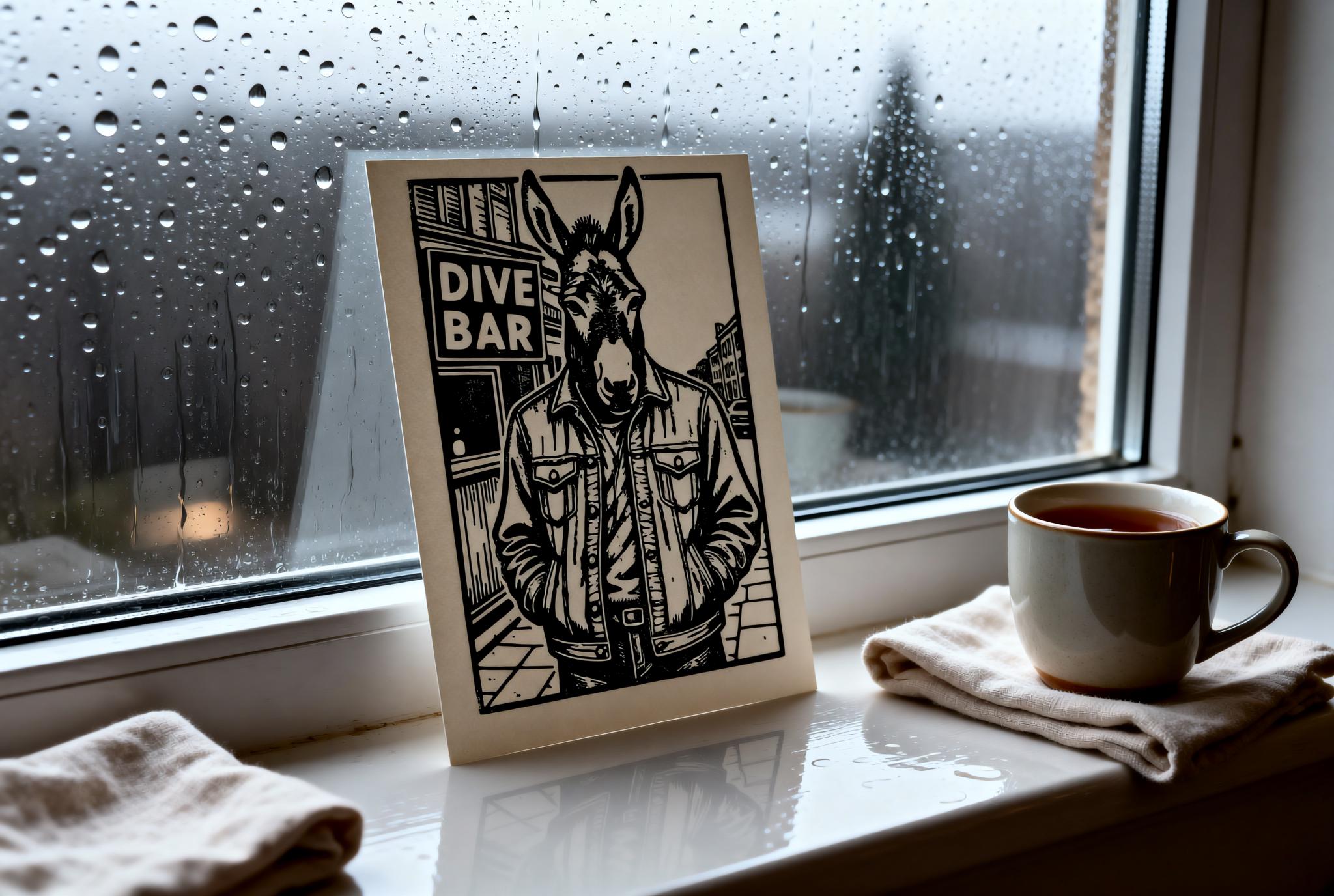
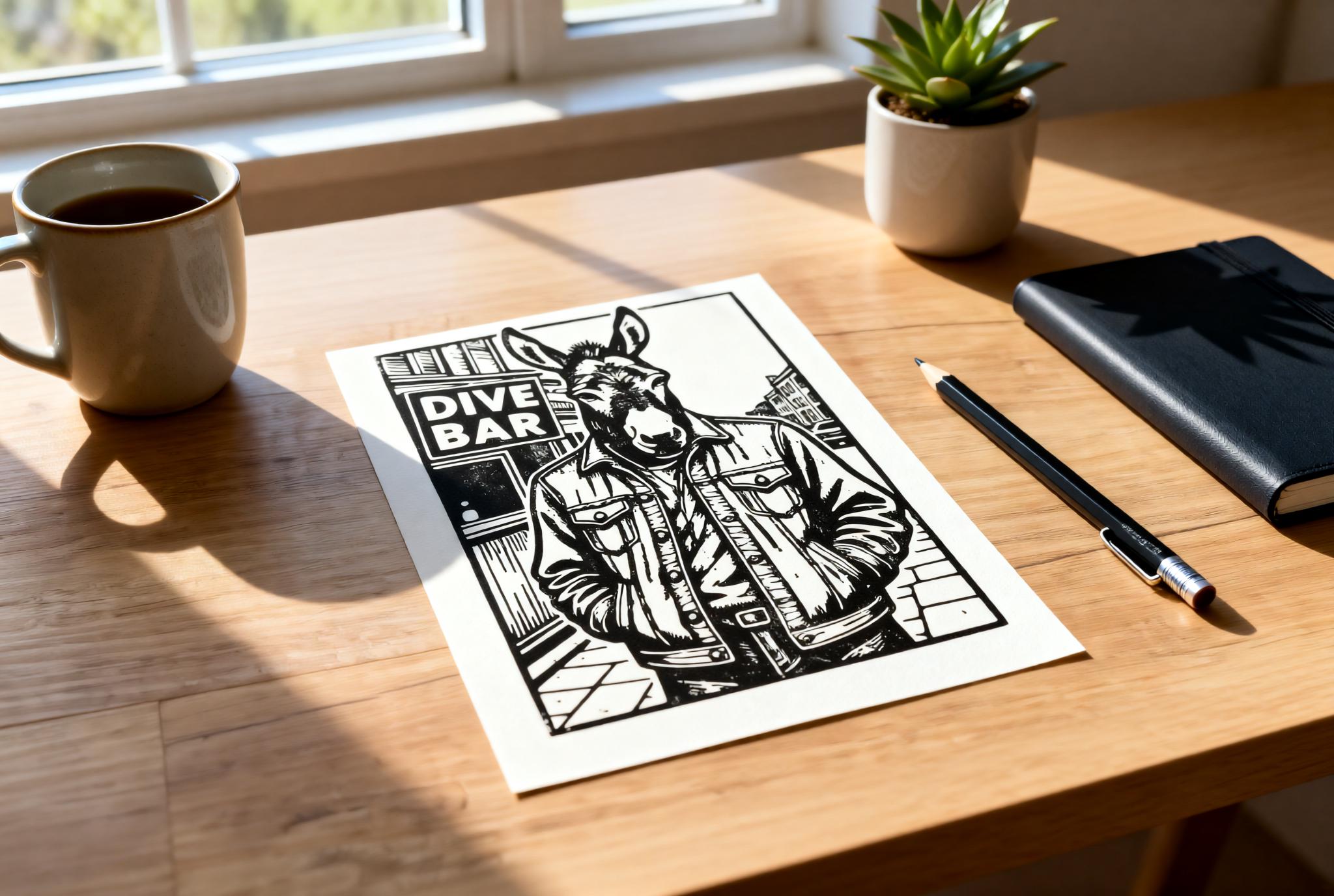
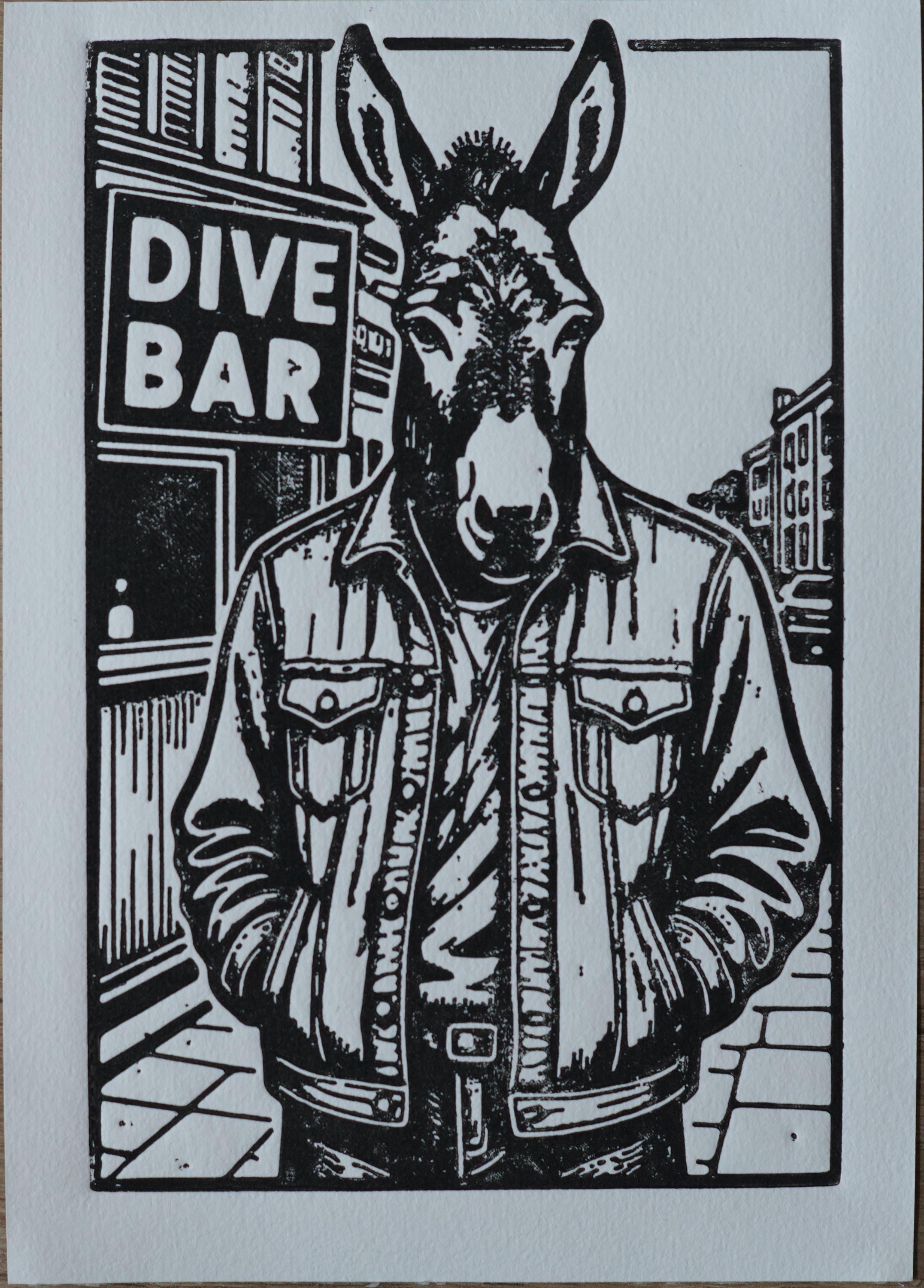
This original linocut print features a donkey in a denim jacket standing outside a DIVE BAR, hands in pockets like it owns the sidewalk. The gritty city scene and bold black ink give it an urban, tattoo-flash vibe, with a perfect mix of humor and attitude. Ideal for bar decor, man caves, music rooms, or anyone who likes their wall art a little bit tough and a little bit ridiculous.
Every print in the Null Pictures studio is carved by hand and pressed individually, so no two come out exactly the same. Slight variations in ink density and paper texture are part of what makes each piece unique. This is donkey art the way it was meant to be — tactile, imperfect, and completely original.
About This Donkey Dive Bar Linocut Print
This donkey linocut is part of the Null Pictures collection of handmade relief prints. Each design starts as a pencil sketch, gets transferred to a linoleum block, and is then hand-carved using traditional printmaking tools. The final print is made by inking the block with oil-based printmaking ink and pressing it onto 300gsm cold-pressed watercolor paper.
Print details:
- Size: A5 (14.8 × 21 cm / 5.8 × 8.3 in)
- Paper: 300gsm cold-pressed watercolor paper
- Ink: Oil-based printmaking ink
- Process: Hand-carved, hand-printed relief print
- Finish: Unframed
- Shipping: Free worldwide shipping via Etsy
Why Linocut Printing?
Linocut is a relief printing technique where the artist carves away the negative space from a linoleum block, leaving the raised surface to receive ink and transfer the image. Unlike digital prints, each linocut carries the physical evidence of the maker — the texture of the carve, the pressure of the press, the slight irregularity that proves a human hand was involved. For collectors who value original art over mass production, linocut prints offer an affordable way to own something genuinely handmade.
Ready to add this donkey print to your collection?